
Master Your Goals with Effective Periodization Training Plans
Are you ready to truly elevate your fitness journey? Understanding and implementing effective periodization training plans is the secret to consistent progress, avoiding plateaus, and achieving your strength and endurance goals. This guide will walk you through everything you need to know to structure your training smarter, not just harder.

Table of Contents
Understanding the Foundation of Periodization Training
Periodization is a systematic approach to training that involves varying the training program at regular intervals to optimize performance and prevent overtraining. It’s not just about working out; it’s about strategically planning your workouts over time.
This method helps your body adapt to different stimuli, ensuring you make continuous gains without burning out. It’s a cornerstone for any athlete or fitness enthusiast serious about long-term success.
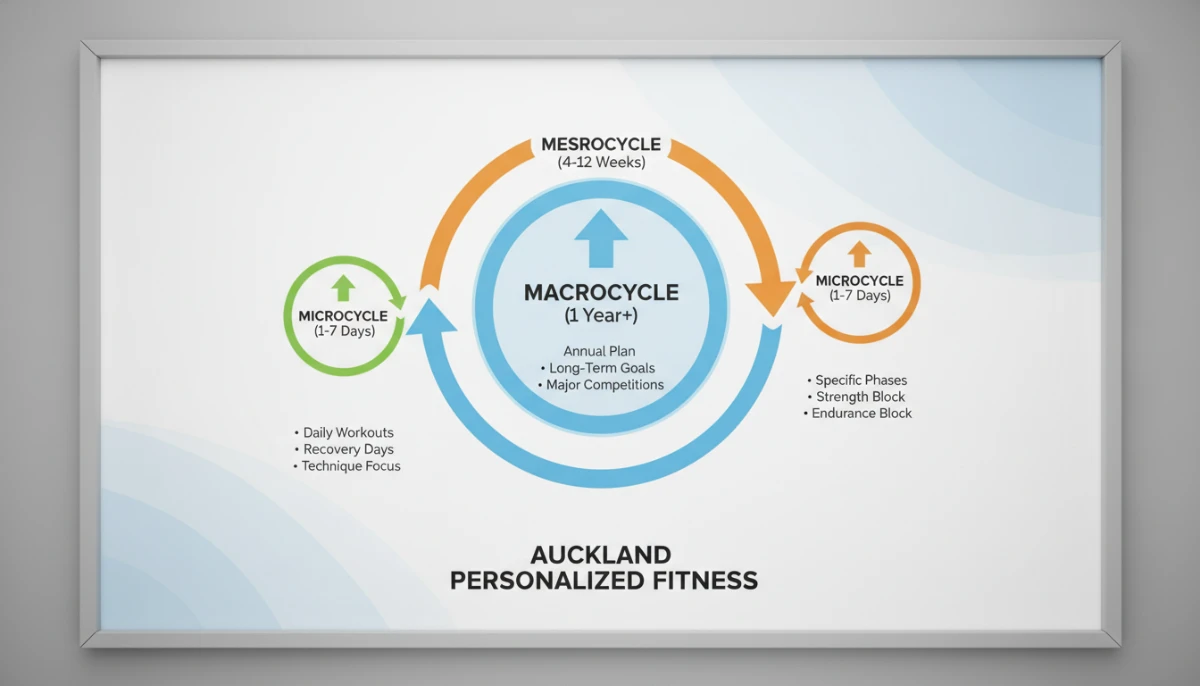
The Training Cycles: Macro, Meso, and Micro
Effective periodization training plans break down into distinct cycles, each serving a specific purpose:
- Macrocycle: This is the largest cycle, usually spanning several months to a year. It covers your entire training year, culminating in a major event or peak performance goal. Think of it as your yearly fitness roadmap.
- Mesocycle: Within the macrocycle, you’ll find several mesocycles. These typically last 3-6 weeks and focus on a specific training phase, such as building strength, improving endurance, or focusing on hypertrophy. Each mesocycle has a clear objective.
- Microcycle: The shortest cycle, often lasting one week. Microcycles contain your daily workouts and address the immediate training load, recovery, and specific exercises. This is where the day-to-day work happens.
By understanding these cycles, you can create a detailed and adaptable training schedule. It allows for planned variations in volume and intensity, which are crucial for adaptation.
Why Periodization Prevents Plateaus and Overtraining
One of the biggest benefits of a structured periodized plan is its ability to prevent stagnation. Without variation, your body quickly adapts to a routine, leading to plateaus where progress halts. Periodization introduces new challenges at optimal times.
It also plays a vital role in preventing overtraining syndrome, which can lead to fatigue, injury, and decreased performance. By building in planned recovery phases and varying intensity, periodization safeguards your body and mind, ensuring you stay healthy and motivated for the long haul.
Beyond individual planning, staying connected can significantly boost your journey. For those interested in local connections and happenings, exploring the Auckland Fitness Community & Local Events can provide valuable support and opportunities.
Crafting Periodization Training Plans for Peak Strength
For those focused on maximizing strength, specific periodization models prove highly effective. The goal is to progressively overload muscles while allowing adequate recovery and avoiding injury. This often involves manipulating sets, reps, and intensity over time.

Linear vs. Undulating Periodization for Strength
Two popular models for strength-focused periodization training plans are linear and undulating:
- Linear Periodization: This traditional approach involves a gradual increase in training intensity and a decrease in training volume over successive mesocycles. For example, you might start with higher reps and lower weights (hypertrophy phase) and slowly progress to lower reps and higher weights (strength/power phase).
- Undulating Periodization: Also known as non-linear, this model varies intensity and volume more frequently, often on a daily or weekly basis. One day might be heavy, another light, and another moderate. This keeps the body constantly adapting to different stimuli. It allows for more flexibility and can be great for lifters who enjoy variety.
Choosing between linear and undulating depends on your experience level, goals, and how your body responds to training. Both can lead to significant strength gains when applied correctly.
Key Phases for Strength Gains
A well-structured strength macrocycle often includes several distinct mesocycles:
- Hypertrophy Phase: Focuses on muscle growth with moderate weights, higher repetitions (8-12 reps), and shorter rest periods. This phase builds a solid foundation for strength.
- Strength Phase: Targets maximal strength development with heavier weights, lower repetitions (3-6 reps), and longer rest periods. This is where true strength is forged.
- Power Phase: Emphasizes explosive movements with lighter weights moved at high speed. This might include Olympic lifts or plyometrics, focusing on rate of force development.
- Peaking Phase: A short phase leading up to a competition or maximal lift attempt, where volume decreases significantly, and intensity remains very high. The goal is to reduce fatigue while maintaining strength.
- Deload/Active Recovery: Crucial for preventing overtraining. This phase involves a significant reduction in volume and intensity, allowing the body to recover and prepare for the next cycle. For new exercisers, understanding the fundamentals of fueling your body is equally important for effective recovery and sustained progress. Learn the essentials with our guide on Basic Nutrition for New Exercisers. And for those in the Auckland area seeking convenient and healthy meal solutions to support their training, exploring Healthy Food Delivery Services Auckland can simplify meal prep and ensure consistent nutrition.
These phases ensure a balanced approach to strength development, building a robust and resilient physique.
Developing Periodization Training Plans for Superior Endurance
Endurance athletes also greatly benefit from periodization. Whether you’re a runner, cyclist, or swimmer, strategically planning your training ensures you peak at the right time and build a strong aerobic base.

Block Periodization for Endurance Athletes
Block periodization is particularly popular in endurance sports. This model concentrates specific training objectives into distinct blocks or mesocycles, allowing for focused adaptations.
For example, an endurance runner might have a block dedicated solely to high-volume, low-intensity running (base building), followed by a block focused on high-intensity interval training, and then a race-specific preparation block. This targeted approach is very efficient.
Many coaches use this method to optimize athlete performance, especially for athletes competing in multiple events throughout the year. For more insights into sports science principles, you can refer to Wikipedia’s article on Periodization.
Key Endurance Training Phases
Effective periodization training plans for endurance typically include:
- Base Phase: Focus on … (truncated)

