
Achieving Safe Post-Injury Fitness Recovery: Your Guide to Getting Back Stronger
Getting back into shape after an injury needs a smart plan. Our guide helps you with post-injury fitness recovery so you can get stronger and avoid new problems. Auckland experts share top tips for a safe return to exercise in 2026.
Table of Contents
Gradual Re-entry Protocols: Your Step-by-Step Plan
Returning to exercise after an injury is not a race. It’s a carefully planned process. Rushing back too soon can lead to re-injury, setting your progress back even further. A gradual re-entry is key for successful post-injury fitness recovery.
Think of your recovery as building a house. You wouldn’t start with the roof before laying a solid foundation. Your body needs the same care. Begin with low-impact activities and slowly increase intensity over time. This phased approach allows your body to adapt and strengthen without undue stress.
Consult with Professionals
Before restarting any exercise, talk to your doctor or a physical therapist. They can provide a clear diagnosis and a personalized recovery plan. Their guidance is vital, especially for complex injuries. Ignoring professional advice can be risky for your long-term health.
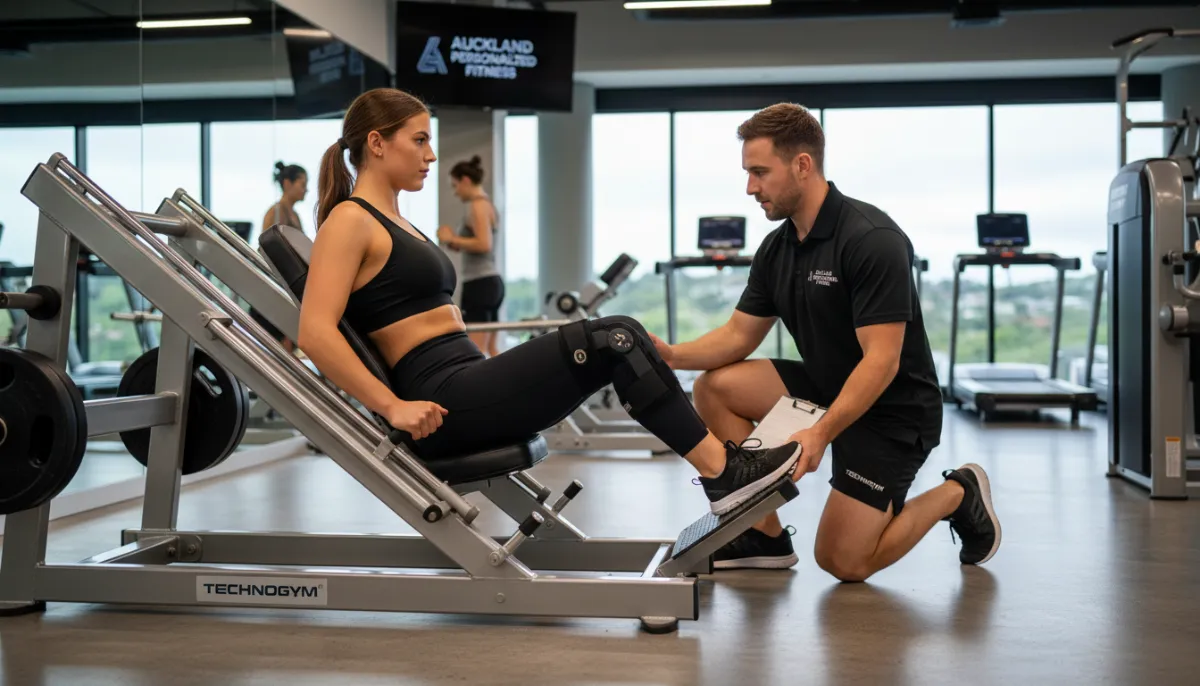
Auckland personalized fitness trainers also work closely with medical professionals. They can help translate your rehabilitation exercises into a safe fitness program. This team-based approach ensures you’re always on the right track. For those needing tailored support, exploring Specialized Personal Training Services can be the perfect bridge between rehab and a full fitness return.
Staying connected with the wider Auckland Fitness Community & Local Events can also provide invaluable motivation, support networks, and opportunities to engage in safe, adapted physical activities as you progress in your recovery.
Start with Low-Impact Activities
Initially, focus on exercises that put minimal stress on your injured area. Walking, swimming, or cycling are excellent choices. These activities help improve circulation and maintain general fitness without high impact.
For example, if you had a knee injury, swimming allows you to move your legs without bearing full weight. Gradually, you can introduce more challenging variations as your strength improves. Always pay attention to how your body feels during and after these sessions.
Progressive Overload: Slowly Increasing Intensity
The principle of progressive overload is crucial. This means slowly increasing the demands on your body over time. It could involve longer workout durations, more repetitions, heavier weights, or increased resistance.
But remember,
slow and steady wins the race when it comes to recovery. Monitor your body’s response carefully. If you feel any sharp pain, stop immediately. It’s better to slightly under-do it than to push too hard and cause a setback.
For proper progressive overload, consider these steps:
- Start Small: Begin with very light weights or short durations.
- Increase Gradually: Add small increments to weight, reps, or time each week.
- Listen to Pain: Differentiate between muscle soreness and actual pain.
- Vary Workouts: Keep your body guessing with different types of exercises.
- Rest and Recover: Allow adequate time for muscle repair and growth.
This systematic approach builds resilience and ensures your post-injury fitness recovery progresses safely and effectively, laying the groundwork for more intense training later.

Listen to Your Body: The Ultimate Recovery Compass
Your body provides important signals during recovery. Ignoring these signals can lead to further injury. Learning to distinguish between normal discomfort and pain requiring rest is vital.
Pain is your body’s way of telling you something is wrong. Soreness after a workout is often normal, but sharp, shooting, or persistent pain is not. Always err on the side of caution.
Understanding Pain Signals
Different types of pain mean different things. A dull ache might be muscle fatigue, which is often acceptable. A sudden, sharp pain, however, could indicate a re-injury or overexertion. Pay attention to:
- Location: Is it at the site of the original injury or elsewhere?
- Intensity: Is it mild, moderate, or severe?
- Duration: Does it subside quickly, or does it linger?
- Trigger: What activity or movement causes it?
Keeping a recovery journal can help you track these details and discuss them with your physical therapist or trainer. This data is priceless for tailoring your post-injury fitness recovery plan.
Importance of Rest Days
Rest is not a sign of weakness; it’s a critical part of recovery. During rest, your muscles repair and rebuild stronger. Without adequate rest, you risk overtraining syndrome, which can delay healing and lead to new injuries.
Schedule active recovery days where you engage in very light activity like walking or gentle stretching. These days can help improve blood flow without stressing your recovering tissues. It is a key component for anyone looking for effective post-injury fitness recovery.
Beyond external cues and structured rest, your internal health profoundly impacts healing. Exploring the link between Gut Health & Its Impact on Fitness can reveal vital strategies for reducing inflammation, optimizing nutrient absorption, and supporting your body’s recovery mechanisms from within.

Build Strength Safely: Foundation for Future Fitness
Once you’ve mastered low-impact activities, building strength becomes the next crucial step. This means strengthening not just the injured area, but also the surrounding muscles. A balanced strength program prevents future imbalances and provides robust support for your joints.
Focus on compound movements that work multiple muscle groups. This mimics real-life activities and builds functional strength. Always prioritize proper form over heavy weights, especially in the early stages of recovery.
Core Strength: Your Body’s Powerhouse
A strong core is fundamental for all physical activity. It provides stability for your spine and transfers power between your upper and lower body. Exercises like planks, bird-dog, and gentle crunches can help rebuild core strength without excessive strain.
Neglecting core strength can lead to compensation patterns, putting extra stress on other body parts. Integrating core work early in your post-injury fitness recovery is a smart move for long-term health.
Targeted Muscle Strengthening
Your physical therapist will likely provide specific exercises to strengthen muscles around the injured area. Stick to these exercises diligently. They are designed to restore specific muscle function and prevent weakness.
As you progress…


