
As we gracefully age, maintaining strength and vitality becomes not just beneficial, but essential. For seniors across Auckland, embracing a regular strength training routine is one of the most powerful steps you can take to safeguard your independence, enhance your quality of life, and continue enjoying all that our vibrant city offers. Forget the myth that strength training is only for the young or elite athletes; it’s a critical component of healthy aging.
This comprehensive guide is designed to empower you with the knowledge and tools for safe and effective strength training for seniors in Auckland, whether you’re working with a mobile personal trainer or incorporating exercises into your home routine. Let’s unlock a stronger, more resilient you.
Table of Contents
- The Indispensable Role of Muscle Mass for Older Adults
- Safe & Effective Strength Exercises for Seniors
- Mastering Progressive Overload for Sustained Strength Gains
- Creating Impactful Home-Based Strength Workouts
- Frequently Asked Questions (FAQ)
- References & Sources
The Indispensable Role of Muscle Mass for Older Adults
As we age, a natural decline in muscle mass and strength, known as sarcopenia, becomes a significant concern. This isn’t just about losing the ability to lift heavy objects; it profoundly impacts everyday activities, balance, metabolism, and overall health. Counteracting sarcopenia through targeted strength training is paramount for older adults in Auckland seeking to maintain an active, independent lifestyle.
Stat Callout: The Silent Threat
Studies show that adults can lose 3-8% of their muscle mass per decade after age 30, with this rate accelerating significantly after age 60. This loss contributes to reduced strength, mobility, and an increased risk of falls.
Beyond just strength, robust muscle mass plays a critical role in:
- Bone Density: Strength training puts stress on bones, stimulating new bone growth and helping to prevent osteoporosis, a common issue for seniors.
- Metabolic Health: Muscle tissue burns more calories at rest than fat tissue, supporting healthy weight management and improving insulin sensitivity, which is vital for managing conditions like Type 2 diabetes.
- Balance and Stability: Stronger muscles, especially in the core and lower body, directly translate to improved balance and coordination, dramatically reducing the risk of falls and subsequent injuries.
- Functional Independence: Everyday tasks like climbing stairs, carrying groceries, or getting up from a chair become easier and safer, allowing seniors to live more independently for longer.
- Cognitive Function: Emerging research suggests a strong link between physical activity, including strength training, and improved cognitive function and brain health in older adults.
Expert Insight
“Regular strength training is the closest thing we have to a ‘fountain of youth’ when it comes to physical health in later life. It’s truly transformative for seniors seeking to maintain vitality and prevent age-related decline.”
Safe & Effective Strength Exercises for Seniors
Safety is paramount when starting any exercise program, especially for older adults. Always consult with your doctor before beginning new routines. Proper form, controlled movements, and listening to your body are key. A qualified mobile personal trainer in Auckland specializing in senior fitness can provide invaluable guidance and personalized programs.
Here are some fundamental exercises, presented step-by-step, that are highly effective for building strength safely:
1. Chair Squats
This foundational exercise is excellent for building lower body strength and improving balance.
- Setup: Stand in front of a sturdy chair with your feet shoulder-width apart, toes pointing slightly out.
- Execution: Slowly lower your hips as if you are going to sit down, keeping your chest up and back straight. Extend your arms forward for balance if needed.
- Hold: Lightly touch the chair with your glutes (don’t fully sit down) and then push through your heels to return to a standing position. Avoid letting your knees go past your toes.
- Repetitions: Aim for 2-3 sets of 8-12 repetitions.
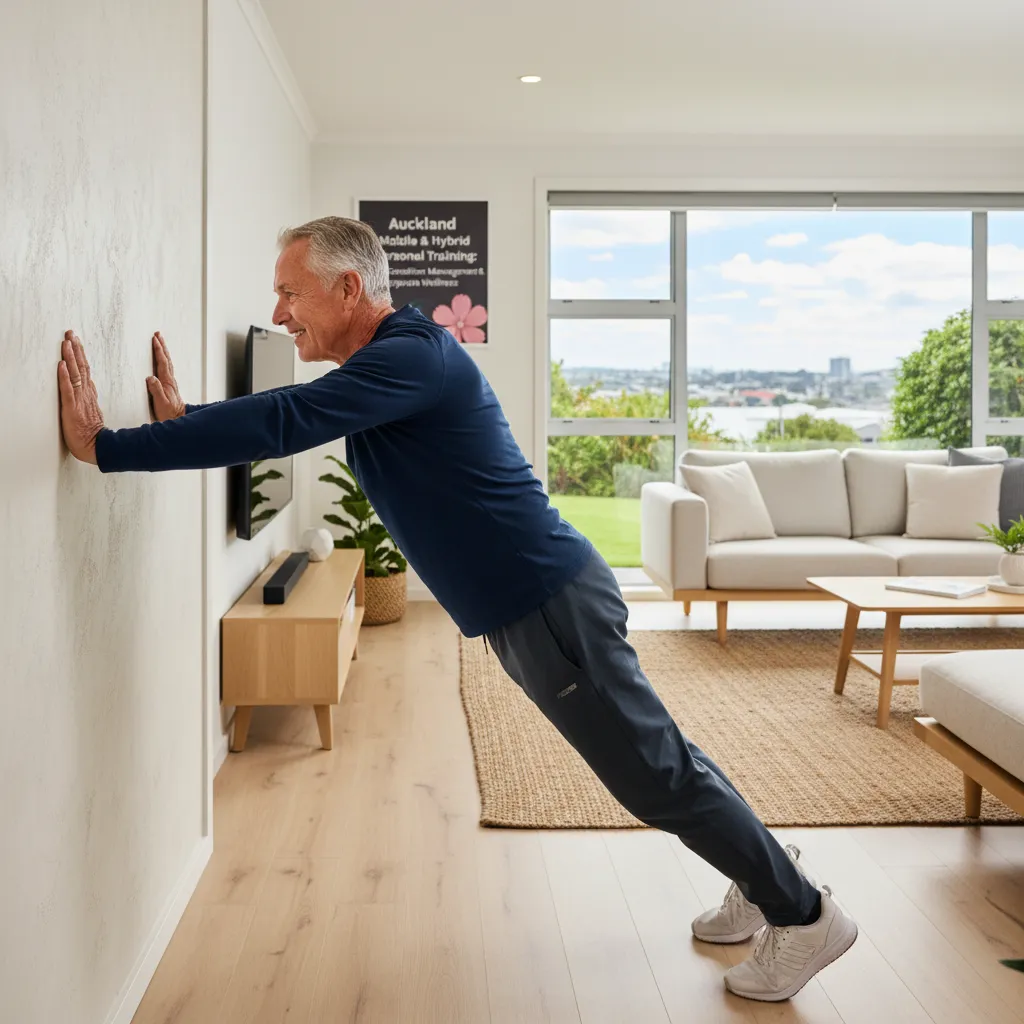
2. Wall Push-Ups
A safer alternative to traditional push-ups, targeting chest, shoulders, and triceps.
- Setup: Stand facing a sturdy wall, about an arm’s length away. Place your palms flat on the wall at shoulder height and width.
- Execution: Lean towards the wall, bending your elbows and keeping your body in a straight line from head to heels.
- Push: Push away from the wall until your arms are straight again.
- Repetitions: Perform 2-3 sets of 10-15 repetitions.
3. Bicep Curls with Resistance Bands
Great for arm strength with adjustable resistance.
- Setup: Stand with feet shoulder-width apart, stepping on the middle of a resistance band. Hold one end of the band in each hand, palms facing forward.
- Execution: Keeping your elbows tucked close to your body, slowly curl your hands towards your shoulders, squeezing your biceps.
- Lower: Slowly lower your hands back to the starting position, controlling the resistance.
- Repetitions: Do 2-3 sets of 10-15 repetitions.
4. Calf Raises
Essential for ankle stability and lower leg strength, crucial for walking and balance.
- Setup: Stand tall with your feet hip-width apart, holding onto a sturdy chair or wall for balance.
- Execution: Slowly lift yourself up onto the balls of your feet, pushing through your toes. Hold for a moment at the top.
- Lower: Slowly lower your heels back down to the floor.
- Repetitions: Complete 2-3 sets of 12-15 repetitions.
Mastering Progressive Overload for Sustained Strength Gains
For muscles to get stronger, they need to be continually challenged. This principle is called progressive overload. For seniors, this doesn’t mean lifting incredibly heavy weights; it means gradually increasing the demands on your muscles over time in a safe and controlled manner. Without progressive overload, your muscles adapt to a certain level of stimulus and stop growing stronger.
Here’s how to implement progressive overload safely:
- Increase Repetitions: Once you can comfortably complete 12-15 repetitions of an exercise with good form, try adding 2-3 more repetitions per set.
- Add Sets: If you’re doing 2 sets of an exercise, try adding a third set.
- Increase Resistance: This could mean using a slightly heavier dumbbell, a stronger resistance band, or performing exercises without assistance (e.g., bodyweight squats instead of chair squats). Increment slowly and ensure form remains perfect.
- Slow Down Tempo: Performing exercises with a slower, more controlled tempo (e.g., taking 3 seconds to lower and 3 seconds to lift) increases time under tension, challenging muscles more effectively.
- Reduce Rest Time: Gradually shorten the rest periods between sets, which can increase the intensity of your workout.
- Increase Frequency: If you’re currently training twice a week, consider adding a third strength training session.
Always prioritize proper form over lifting heavier or doing more repetitions. If you’re unsure how to apply these techniques, a personal trainer specializing in strength training for seniors in Auckland can guide you.
Creating Impactful Home-Based Strength Workouts
The convenience of home-based workouts makes them an excellent option for seniors. You don’t need a gym full of equipment; many effective exercises can be done with minimal gear. For those who prefer a structured approach, mobile personal training for seniors in Auckland brings the expertise directly to your door, utilizing your home environment effectively.
Here’s a sample structure for an effective home strength workout:
1. The Warm-Up (5-10 minutes)
Prepare your body for exercise and reduce injury risk.
- Marching in Place: Gentle marching, lifting knees high for 2-3 minutes.
- Arm Circles: Perform small forward and backward circles with your arms for 1 minute each direction.
- Torso Twists: Gently twist your torso from side to side, keeping hips relatively stable for 1-2 minutes.
2. Core Strength & Balance (15-20 minutes)
Essential for stability and preventing falls.
- Standing Leg Lifts: Hold onto a chair, slowly lift one leg out to the side, then back, then backward. 10-12 reps per leg.
- Heel-to-Toe Walk: Walk in a straight line, placing the heel of one foot directly in front of the toes of the other. Do 10-15 steps.
- Plank (Modified): Against a wall or on knees. Hold for 20-30 seconds, 2-3 sets.
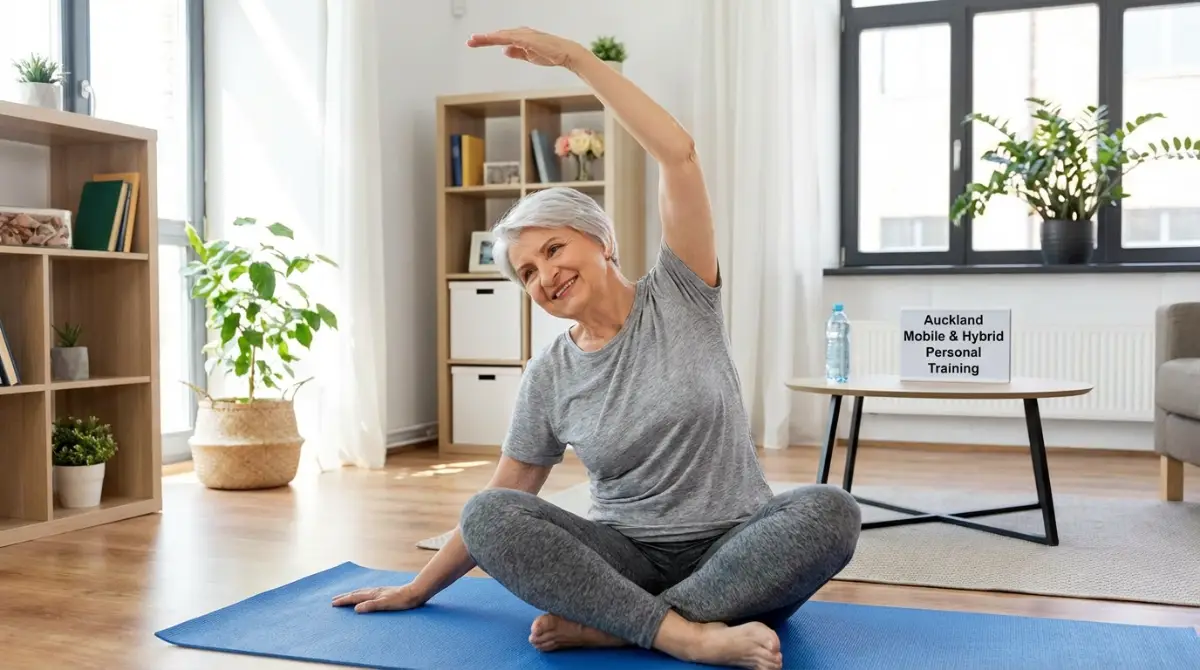
3. Cool-Down & Stretch (5-10 minutes)
Aid recovery and improve flexibility.
- Hamstring Stretch: Sit on the floor with one leg extended, reach for your toes. Hold for 20-30 seconds per leg.
- Triceps Stretch: Reach one arm overhead, bend elbow, use other hand to gently push elbow down. Hold for 20-30 seconds per arm.
- Gentle Breathing: Finish with a few minutes of deep, slow breathing to relax.
Consistency is key. Aim for 2-3 strength training sessions per week, allowing a day of rest between sessions for muscle recovery.
Embrace a Stronger Future in Auckland
Embracing strength training for seniors in Auckland is more than just exercise; it’s an investment in your health, independence, and overall enjoyment of life. By understanding the importance of muscle mass, performing safe and effective exercises, and applying progressive overload, you can build a robust foundation for active aging.
Whether you choose to work with a dedicated mobile personal trainer or follow a well-structured home program, remember that every repetition counts. Start today, listen to your body, and enjoy the remarkable benefits of a stronger you.
Frequently Asked Questions (FAQ) about Strength Training for Seniors in Auckland
Is it ever too late to start strength training as a senior?
Absolutely not! Research consistently shows that older adults, even those in their 80s and 90s, can significantly increase their muscle mass and strength through resistance training. The body’s capacity to adapt and grow stronger remains throughout life. Consulting with a specialist in senior fitness in Auckland can help you start safely.
How often should seniors do strength training?
Most guidelines recommend that seniors engage in strength training 2-3 times per week, with at least one rest day between sessions to allow muscles to recover and rebuild. Consistency is more important than intensity, especially when starting out.
What kind of equipment do I need for home-based strength training?
You can start with very little! Bodyweight exercises (like chair squats, wall push-ups) are highly effective. As you progress, consider investing in resistance bands (varying strengths), light dumbbells (1-5 kg), and a sturdy chair. A mobile personal trainer in Auckland can also bring equipment to your sessions.
How can strength training help prevent falls?
Strength training directly improves muscle strength in the legs, core, and back, which are crucial for maintaining balance and stability. It also enhances coordination and proprioception (your body’s awareness of its position in space), all of which significantly reduce the risk of falls and increase confidence in movement.
References & Sources
- American College of Sports Medicine. (2009). Position Stand: Exercise and Physical Activity for Older Adults. www.acsm.org
- Fragala, M. S., et al. (2019). Resistance Training for Older Adults: Position Statement From the National Strength and Conditioning Association. Journal of Strength and Conditioning Research, 33(8), 2019-2052.
- Liu, C. J., & Latham, N. K. (2009). Progressive Resistance Strength Training for Improving Physical Function in Older Adults. Physical Medicine and Rehabilitation Clinics of North America, 20(2), 297–313.
- Cruz-Jentoft, A. J., et al. (2019). Sarcopenia: Revised European consensus on definition and diagnosis. Age and Ageing, 48(1), 16–31.
- National Institute on Aging. (n.d.). Exercise and Physical Activity. www.nia.nih.gov