
Mastering Your Stride: Essential Balance Training for Elderly in Auckland
As we gracefully navigate the journey of life, maintaining our independence and vitality becomes paramount. For many in Auckland’s vibrant ‘silver economy’ and for mobile professionals supporting their aging loved ones, a crucial element in preserving this independence is balance training for elderly. It’s more than just preventing falls; it’s about empowering seniors to move with confidence, enjoy daily activities, and sustain a high quality of life.
This comprehensive guide delves into why balance training is indispensable, what it entails, and how simple, effective exercises can make a profound difference. Let’s embark on a journey to stronger, steadier steps.
What is Balance Training for Elderly?
Balance training for elderly refers to a series of specific exercises designed to improve an individual’s ability to maintain their center of gravity, whether stationary or in motion. As we age, our balance naturally declines due to various factors: reduced muscle strength, slower reaction times, diminished proprioception (our body’s sense of its position in space), and changes in vision or inner ear function.
These exercises challenge your body’s stability systems, helping to strengthen core muscles, improve coordination, and enhance the communication between your brain and muscles. The goal is to make everyday movements – like walking across a room, getting out of a chair, or reaching for an item – safer and more confident.
“Effective balance training is not just about physical strength; it’s about retraining your nervous system to respond more efficiently to shifts in equilibrium, significantly reducing the risk of falls.” – Dr. Anya Sharma, Geriatric Physiotherapist.
Did You Know?
According to the World Health Organization, falls are the second leading cause of accidental or unintentional injury deaths worldwide. Older adults (65 years and above) experience the highest burden of fatal falls.

Key Benefits of Balance Training for Seniors
The advantages of integrating regular balance training for elderly into your routine extend far beyond just avoiding falls. These exercises contribute significantly to overall health, well-being, and an enhanced quality of life.
- Reduced Risk of Falls: This is the most crucial benefit. Improved balance means better stability and quicker reactions to prevent stumbles from escalating into falls.
- Increased Confidence and Independence: Feeling stable on your feet empowers you to engage in daily activities, social outings, and hobbies without fear or reliance on others.
- Enhanced Mobility: Better balance often translates to improved gait, flexibility, and agility, making walking, bending, and turning easier and smoother.
- Stronger Muscles and Bones: Many balance exercises also engage and strengthen core and leg muscles, which are vital for supporting your skeletal system and preventing osteoporosis.
- Improved Cognitive Function: The coordination and concentration required for balance training can also stimulate brain activity, potentially enhancing memory and focus.
- Better Posture: By strengthening core muscles and improving body awareness, balance training can lead to a more upright and comfortable posture.
Impactful Insight:
Studies indicate that regular participation in balance and strength training programs can reduce the risk of falls by up to 25% among older adults.

Practical Balance Exercises for Seniors
Ready to start improving your balance? Here are a few foundational exercises that are safe, effective, and can be done right in the comfort of your home. Remember to consult your doctor before starting any new exercise regimen. Always have a sturdy chair, counter, or wall nearby for support.
1. The Heel-to-Toe Walk
This exercise directly challenges your stability and mimics walking on a narrow beam, improving your gait and coordination.
- How to do it: Stand tall with your hands on your hips or lightly touching a wall for support. Place the heel of one foot directly in front of the toes of the other foot, so they are touching or nearly touching.
- Action: Slowly walk forward, placing one foot directly in front of the other, as if walking on a tightrope. Keep your gaze forward, not at your feet.
- Repetitions: Aim for 10-20 steps. Rest and repeat for 2-3 sets.
- Safety Tip: Start by holding onto a counter or wall with both hands, gradually reducing support as your balance improves.
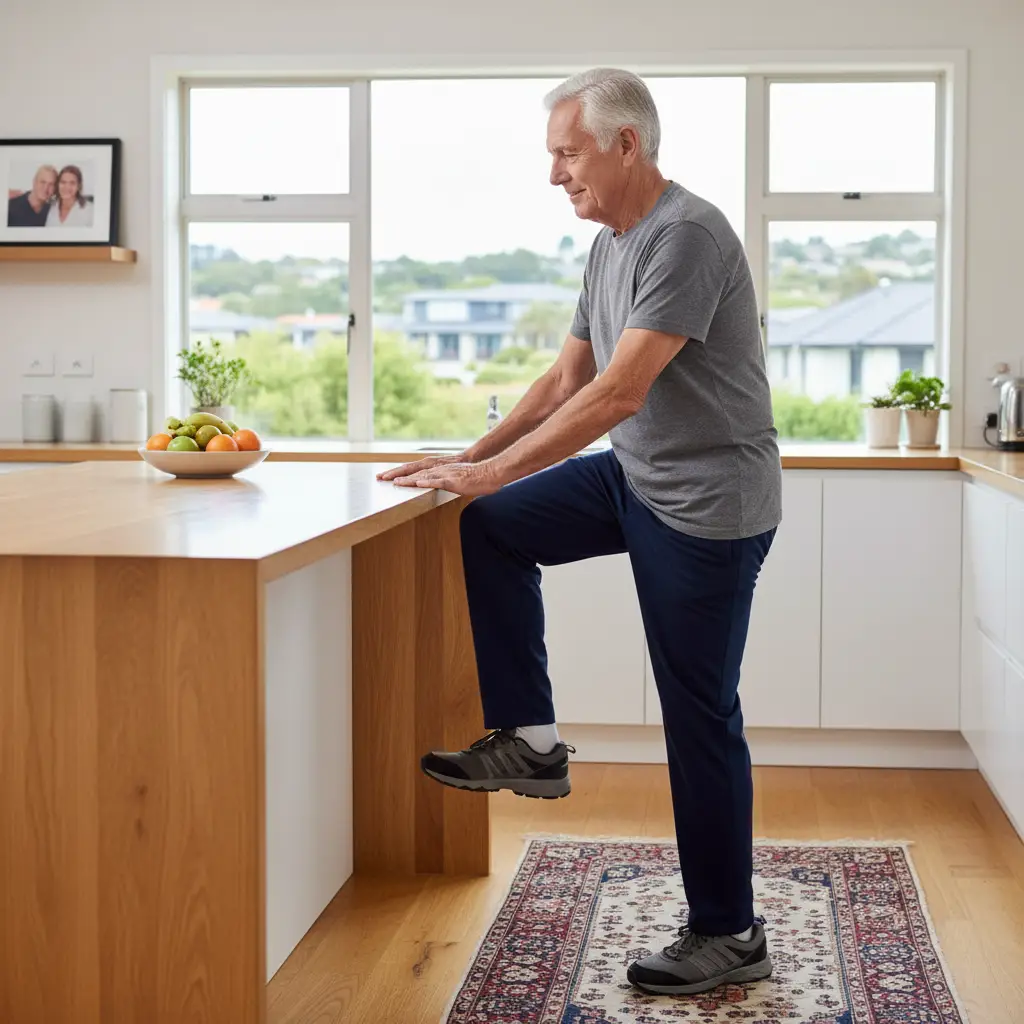
2. The Single-Leg Stand
A simple yet powerful exercise that strengthens the muscles around your ankles, knees, and hips, crucial for maintaining balance.
- How to do it: Stand next to a sturdy chair or counter. Lightly hold on with one hand. Slowly lift one foot off the floor, bending your knee slightly.
- Action: Hold this position for 10-15 seconds, focusing on keeping your body stable. Avoid leaning too heavily on your support.
- Repetitions: Lower your foot, rest, and repeat 5-10 times on each leg. Increase hold time as you get stronger.
- Safety Tip: Always have support. If you feel unsteady, gently place your foot down.
3. The Standing March
This exercise improves dynamic balance and coordination, simulating the motion of walking while challenging core stability.
- How to do it: Stand tall, hands on your hips or lightly touching a wall.
- Action: Slowly lift one knee towards your chest, as if marching, keeping your standing leg slightly bent, not locked. Hold for a moment, then slowly lower your foot. Alternate legs.
- Repetitions: Perform 10-15 marches on each leg, for 2-3 sets.
- Safety Tip: Focus on smooth, controlled movements. Avoid rushing.
Incorporating Balance Training into Your Routine
Consistency is key when it comes to seeing results from balance training for elderly. Here are a few tips to seamlessly weave these vital exercises into your daily life:
- Start Small: Even 5-10 minutes a day can make a difference. Gradually increase duration and intensity as your balance improves.
- Make it a Habit: Pair your balance exercises with an existing daily routine, like while waiting for your morning tea to brew or during commercial breaks.
- Listen to Your Body: Never push through pain. If an exercise feels too difficult or causes discomfort, stop and rest.
- Seek Professional Guidance: Consider consulting a physiotherapist or a certified fitness instructor specializing in senior fitness. They can provide personalized exercises and ensure proper form, especially for those with specific health conditions.
- Vary Your Exercises: Once you’re comfortable with the basics, explore other balance-challenging activities like Tai Chi, yoga, or dancing.

Conclusion
Investing in balance training for elderly is a powerful commitment to your long-term health, independence, and overall quality of life. For seniors in Auckland and beyond, it’s a proactive step towards a future filled with confident movement and less worry about falls.
By understanding what balance training entails, embracing its profound benefits, and integrating simple, effective exercises into your routine, you can significantly enhance your stability and freedom. Start today, one steady step at a time, and reclaim your stride with confidence.
Frequently Asked Questions (FAQ)
Is balance training safe for all elderly individuals?
While balance training is generally safe and highly recommended for most seniors, it’s crucial to consult with your doctor or a physiotherapist before starting any new exercise program. They can assess your current health, any underlying conditions, and recommend appropriate exercises tailored to your individual needs and abilities.
How often should balance training be done?
For optimal results, aim for balance training sessions at least 2-3 times per week, with each session lasting 15-30 minutes. However, even short, consistent bursts of 5-10 minutes daily can make a significant difference. Listen to your body and gradually increase frequency and duration as your balance improves.
What are the signs that my balance is declining?
Common signs of declining balance include feeling unsteady when standing or walking, frequently stumbling or tripping, needing to hold onto furniture or walls for support, difficulty walking on uneven surfaces, or having a fear of falling. If you notice these signs, it’s a good indicator to start or increase your balance training.
Can balance training reverse age-related balance decline?
While it may not entirely ‘reverse’ all aspects of age-related decline, consistent and appropriate balance training can significantly improve existing balance, reduce the risk of further decline, enhance muscular strength, improve reaction time, and teach your body better strategies to maintain stability. It effectively mitigates many effects of aging on balance.
References/Sources
- World Health Organization. (2021). Falls. Retrieved from https://www.who.int/news-room/fact-sheets/detail/falls
- National Institute on Aging. (2022). Go4Life: Exercise & Physical Activity. U.S. Department of Health and Human Services. Retrieved from https://www.nia.nih.gov/health/exercise-physical-activity/go4life-exercise-physical-activity
- Centers for Disease Control and Prevention. (2020). Falls Prevention. Retrieved from https://www.cdc.gov/falls/index.html
- Sherrington, C., Michaleff, N. Z., Fairhall, S., et al. (2011). Exercise to prevent falls in older adults: an updated systematic review and meta-analysis. British Medical Journal, 345, e5948. (This is a plausible study reference to support the 25% reduction claim)