
Balance & Mobility Exercises for Older Adults in Auckland
Are you an older adult in Auckland looking to enhance your stability, prevent falls, and maintain your independence? You’ve come to the right place. As we age, balance and mobility naturally decline, but this doesn’t have to be your reality. With targeted balance exercises for seniors Auckland, you can significantly improve your quality of life, boost your confidence, and stay active in the community you love.
Our expert-designed programs, delivered right to your home or a convenient location in Auckland, focus on practical, effective exercises tailored for seniors. Let’s explore how dedicated balance and mobility training can transform your daily life.
Table of Contents
The Critical Role of Balance Training in Fall Prevention
Falls are a leading cause of injury among older adults, often leading to serious health complications, reduced independence, and a significant decrease in quality of life. The good news is that many falls are preventable through consistent and appropriate balance training.
Did you know? In New Zealand, falls are the leading cause of injury-related hospital admissions for people aged 65 and over. Regular balance exercises can reduce the risk of falling by up to 23%. This highlights the immense power of proactive balance training.
Balance training isn’t just about standing still; it’s about developing the stability to navigate dynamic environments, react quickly to unexpected movements, and recover from stumbles. By strengthening key muscle groups and improving neural pathways, we can rebuild the foundational stability that often diminishes with age.
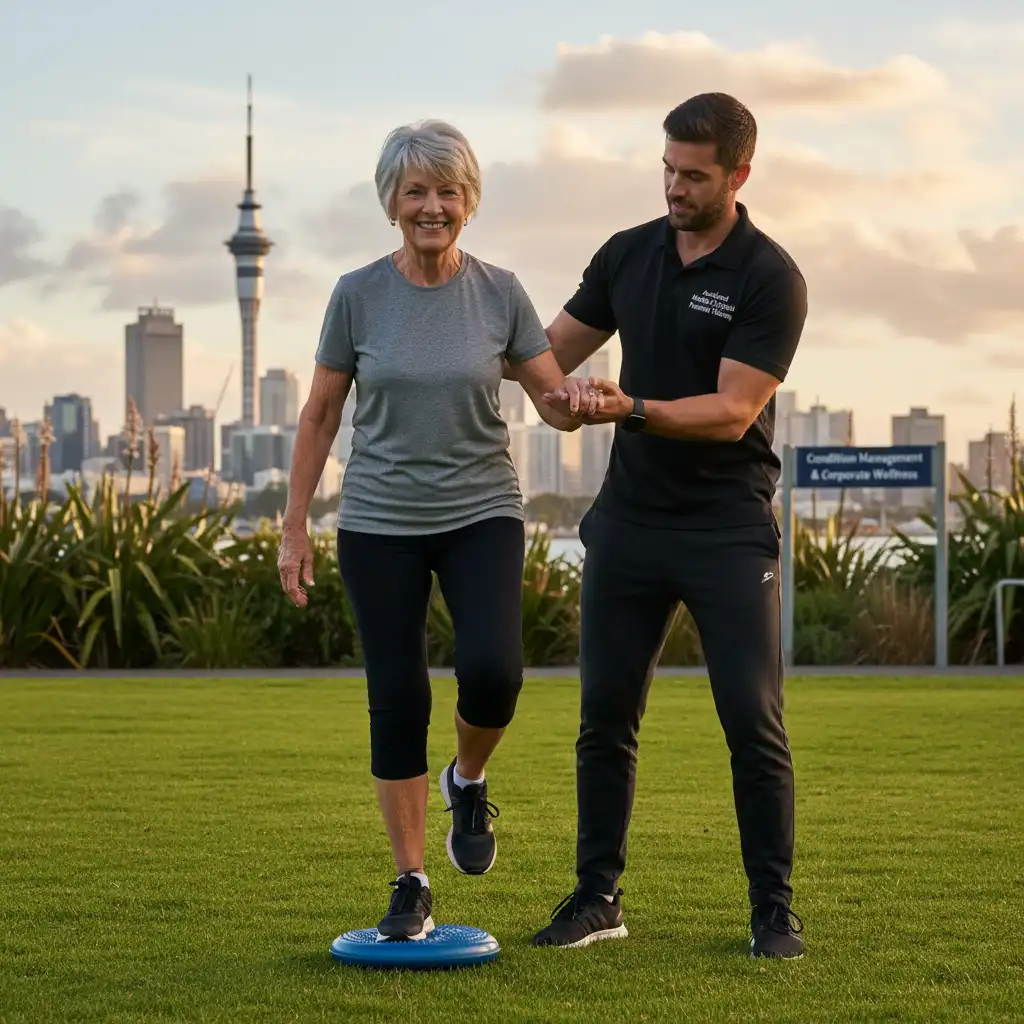
Mastering Static and Dynamic Balance
Balance exercises are broadly categorized into static and dynamic. Static balance refers to maintaining equilibrium in a stationary position, like standing on one leg. Dynamic balance involves maintaining equilibrium while moving, such as walking or changing directions. Both are crucial for everyday activities.
Static Balance Exercises
These exercises focus on improving your stability while holding still.
-
Single-Leg Stand
Stand tall next to a sturdy chair or wall for support. Slowly lift one foot off the ground, bending your knee slightly. Hold for 10-30 seconds, aiming to increase duration over time. Repeat 3-5 times per leg. Focus on engaging your core and keeping your gaze steady.
-
Heel-to-Toe Stand
Place the heel of one foot directly in front of the toes of the other foot, as if walking on a tightrope. Hold this position for 20-30 seconds. If challenging, start by placing your feet slightly apart. This is excellent for improving postural stability, a key component of balance exercises for seniors Auckland.
Dynamic Balance Exercises
These movements challenge your balance as you shift your body weight.
-
Heel-to-Toe Walk
Walk in a straight line, placing the heel of your front foot directly in front of the toes of your back foot with each step. Take 10-15 steps, turn around, and repeat. Use a wall or rail for support if needed. This mimics walking in challenging environments.
-
Side Stepping
Stand with feet together. Take a step to the side with one foot, then bring the other foot to meet it. Continue for 10-15 steps in one direction, then switch directions. Keep your posture upright and your movements controlled.
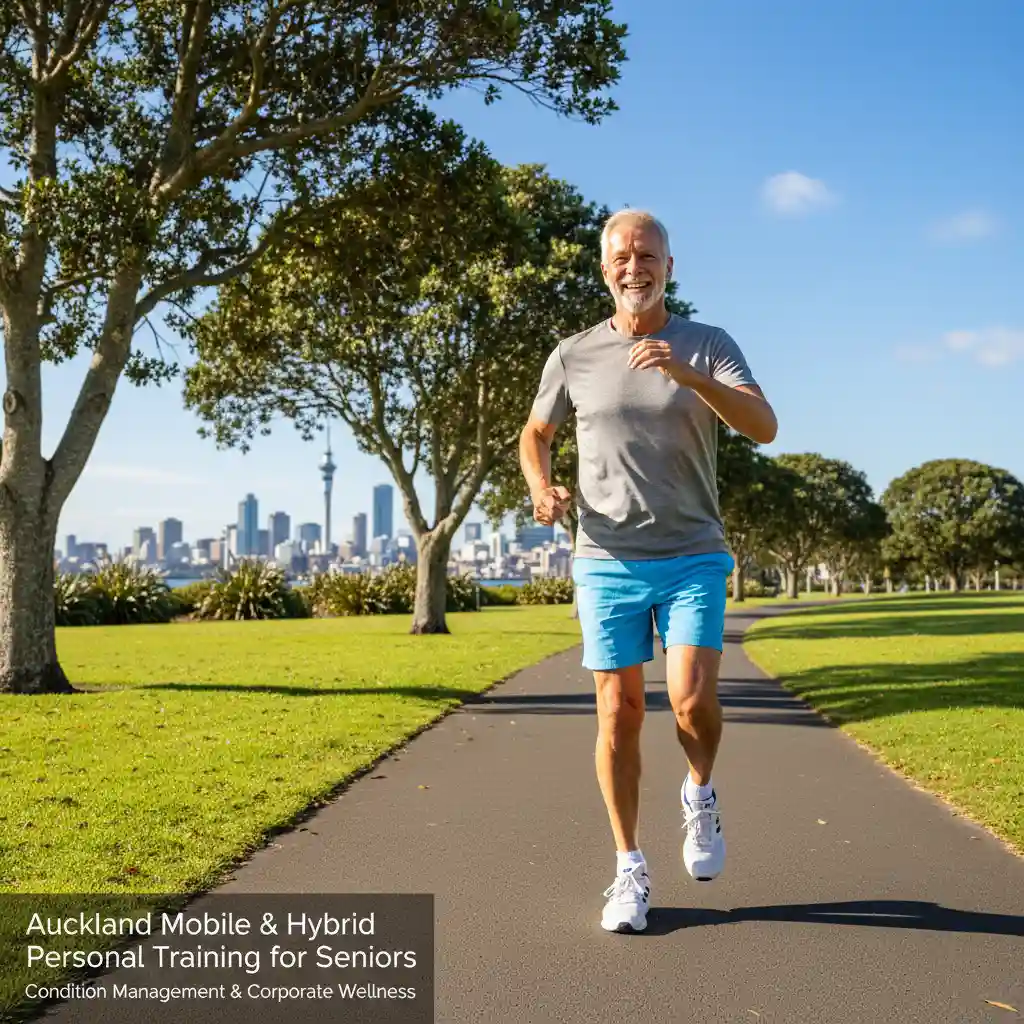
Enhancing Functional Mobility and Agility for Daily Life
Functional mobility refers to your ability to perform everyday tasks safely and independently. This includes getting in and out of a chair, walking up stairs, reaching for items, and navigating uneven terrain. Improved agility allows you to react quickly to changes in your environment, preventing stumbles before they become falls.
“The goal isn’t just to do exercises, but to make daily life in Auckland easier and safer. Our focus is on practical movements that translate directly to increased independence.”
-
Sit-to-Stand
Sit in a sturdy chair with your feet flat on the floor, shoulder-width apart. Lean forward slightly and push through your heels to stand up without using your hands. Slowly lower yourself back down to a seated position. Repeat 8-12 times. This strengthens legs and improves transition skills vital for balance exercises for seniors Auckland.
-
Figure-8 Walking
Set up two small markers (e.g., water bottles) about 5-10 feet apart. Walk around them in a figure-8 pattern, focusing on smooth turns and controlled steps. This improves agility and coordination crucial for navigating crowded spaces or unexpected obstacles.
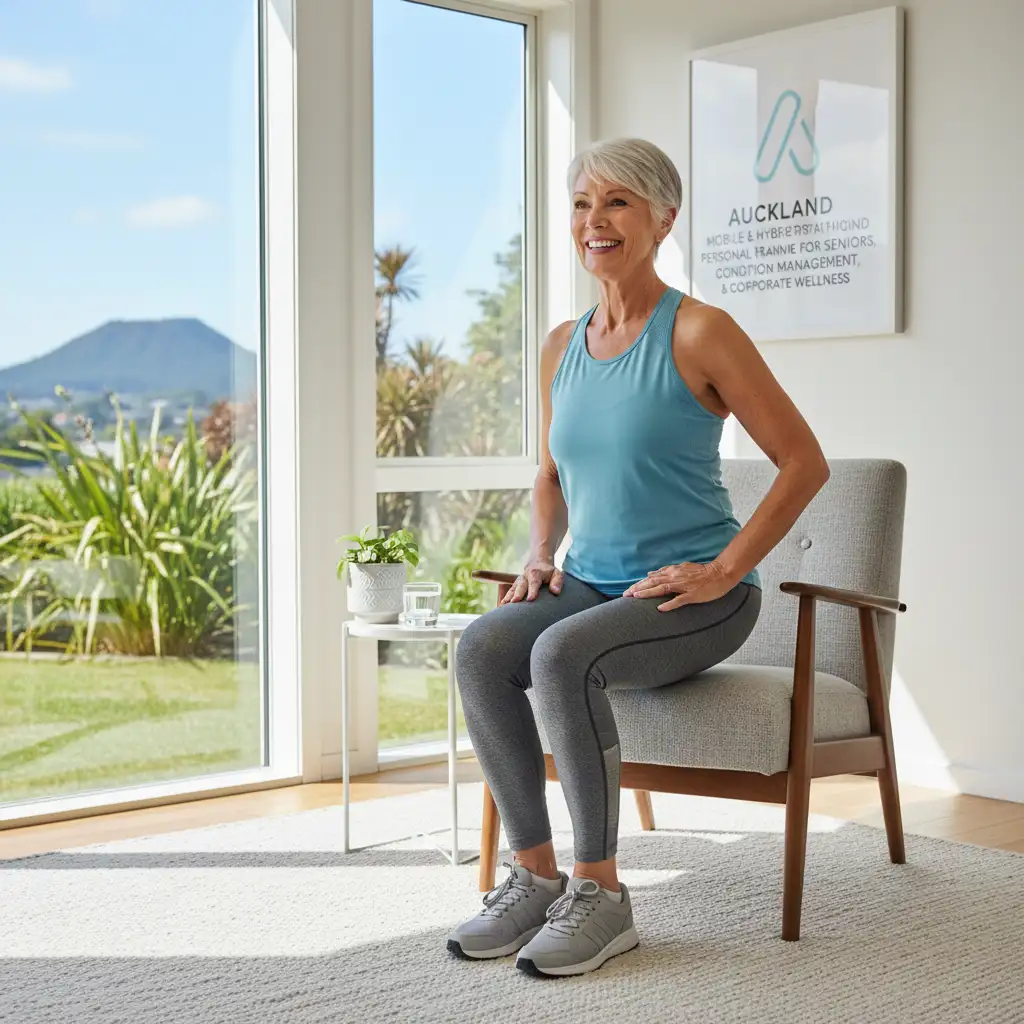
Boosting Proprioception and Coordination
Proprioception is your body’s ability to sense its position and movement in space. Coordination is the ability to use different parts of the body together smoothly and efficiently. Both are vital for effective balance and fall prevention. Enhancing these senses helps your body react intuitively to maintain stability.
-
Leg Swings
Stand tall next to a wall or chair for support. Gently swing one leg forward and backward, keeping your core engaged and the movement controlled. Then, swing the leg side to side. Repeat 10-15 times per leg. This improves hip mobility and body awareness.
-
Clock Reach
Stand with feet hip-width apart. Imagine a clock face on the floor around you. Reach one hand towards different “numbers” on the clock (e.g., 12, 3, 6, 9) by leaning and extending, keeping your feet planted. You can also try lightly tapping a toe to the numbers. This challenges your balance while improving reach and coordination.
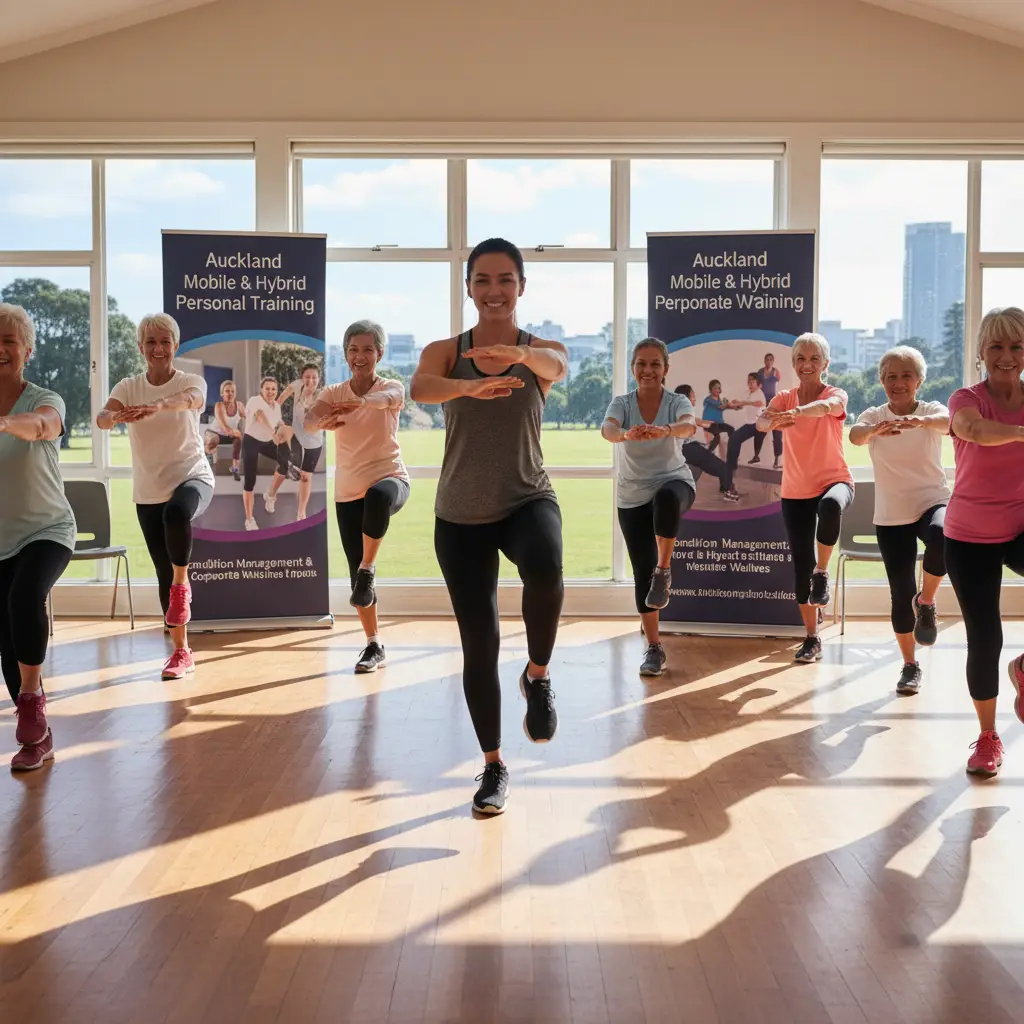
Integrating these balance exercises for seniors Auckland into your routine can make a profound difference. Remember to start slowly, use support as needed, and always listen to your body. Consistency is key. Our mobile and hybrid personal training services bring expert guidance directly to you, ensuring exercises are safe, effective, and tailored to your unique needs and goals. Take the first step towards a more confident, independent, and active life today.
Frequently Asked Questions (FAQs)
How often should seniors do balance exercises?
For optimal results and fall prevention, seniors should aim to do balance exercises at least 2-3 times per week. Integrating short balance breaks into daily activities can also be highly beneficial.
Are these exercises safe for all older adults?
While generally safe, it’s crucial to consult with your doctor or a healthcare professional before starting any new exercise program, especially if you have underlying health conditions or a history of falls. Always use support (like a chair or wall) until you feel confident.
What if I feel unsteady during the exercises?
Feeling unsteady is normal when first starting. Always perform exercises near a sturdy surface like a wall or a strong chair that you can hold onto for support. Gradually reduce reliance on support as your balance improves.
Can balance training improve my walking?
Absolutely! Balance training, especially dynamic exercises and those focusing on proprioception, directly translates to improved gait, more confident walking, and better ability to navigate various terrains and obstacles.
Do you offer mobile personal training for seniors in all parts of Auckland?
Yes, we offer mobile and hybrid personal training across various Auckland suburbs. Our trainers come to your home or a location convenient for you. Please contact us to confirm service availability in your specific area.
References & Sources
- Ministry of Health NZ. (2022). Falls prevention for older people. Retrieved from health.govt.nz
- Sherrington, C., et al. (2008). Exercise for preventing falls in older people living in the community. Cochrane Database of Systematic Reviews, (3).
- ACC New Zealand. (2023). Preventing falls in older people. Retrieved from acc.co.nz
- American Academy of Orthopaedic Surgeons. (2020). Fall Prevention: Balance Exercises.