
Master Your Stance: Essential Posture Correction Exercises for Auckland’s Active Lifestyles
Are you one of Auckland’s dynamic mobile professionals, constantly on the go, or a valued member of the Silver Economy enjoying life but noticing those subtle aches? In our fast-paced world, perfect posture often takes a backseat to deadlines, commutes, and daily routines. Yet, maintaining proper alignment is crucial for overall well-being, energy levels, and even professional presence.
Poor posture can lead to a cascade of issues, from chronic back and neck pain to reduced mobility and fatigue. But the good news is, you don’t need a complete overhaul of your life to start seeing improvements. Simple, targeted posture correction exercises can make a profound difference, empowering you to stand taller, feel better, and move with greater ease.
This comprehensive guide is designed specifically for you – whether you’re navigating Auckland’s bustling CBD between meetings or enjoying your golden years with a desire to stay active and pain-free. Let’s unlock the secrets to a stronger, more aligned you.
Table of Contents
- What Are Posture Correction Exercises?
- Key Benefits for Auckland’s Silver Economy & Mobile Professionals
- Effective Posture Correction Exercises You Can Do Anywhere
- Conclusion: Stand Tall, Live Fully
- Frequently Asked Questions (FAQ)
- References/Sources
What Are Posture Correction Exercises?
Posture correction exercises are targeted movements and stretches designed to strengthen weak muscles, lengthen tight muscles, and bring your body back into optimal alignment. They focus on retraining your muscles and nervous system to hold your body in a balanced and efficient position.
For Auckland’s mobile professionals, this often means addressing the common “tech neck” and rounded shoulders from prolonged screen time and desk work. For the Silver Economy, it involves counteracting age-related muscle loss and stiffness, improving balance, and maintaining functional independence.
STAT CALLOUT: Did you know? A study published in the Journal of Physical Therapy Science suggests that prolonged sitting (common for both groups) can significantly contribute to poor posture and musculoskeletal pain. Investing in your posture is an investment in your long-term health and productivity.
These exercises aren’t about achieving a rigid, unnatural pose. Instead, they aim for a natural, effortless alignment that allows your body to function at its best, reducing strain on joints and ligaments.

Key Benefits for Auckland’s Silver Economy & Mobile Professionals
Adopting a routine of posture correction exercises at Convenient Personal Training Locations Auckland offers a wealth of advantages tailored to your unique lifestyles:
- Reduced Pain: Say goodbye to nagging back pain, stiff necks, and tension headaches often caused by poor alignment.
- Increased Energy: When your body is properly aligned, your muscles work more efficiently, reducing fatigue and boosting your overall energy levels.
- Enhanced Professional Presence: Standing tall exudes confidence and professionalism, crucial for Auckland’s competitive business environment.
- Improved Breathing & Digestion: Better posture allows your diaphragm and internal organs to function optimally, enhancing lung capacity and digestive health.
- Greater Mobility & Balance: For the Silver Economy, this means reduced risk of falls, maintained independence, and the ability to enjoy Auckland’s beautiful landscapes with ease.
- Better Mood & Confidence: Studies suggest a strong link between upright posture and improved mood and self-esteem.
Effective Posture Correction Exercises You Can Do Anywhere
Here are some fundamental posture correction exercises that you can easily incorporate into your daily routine, whether you’re at the office, at home, or traveling for work.
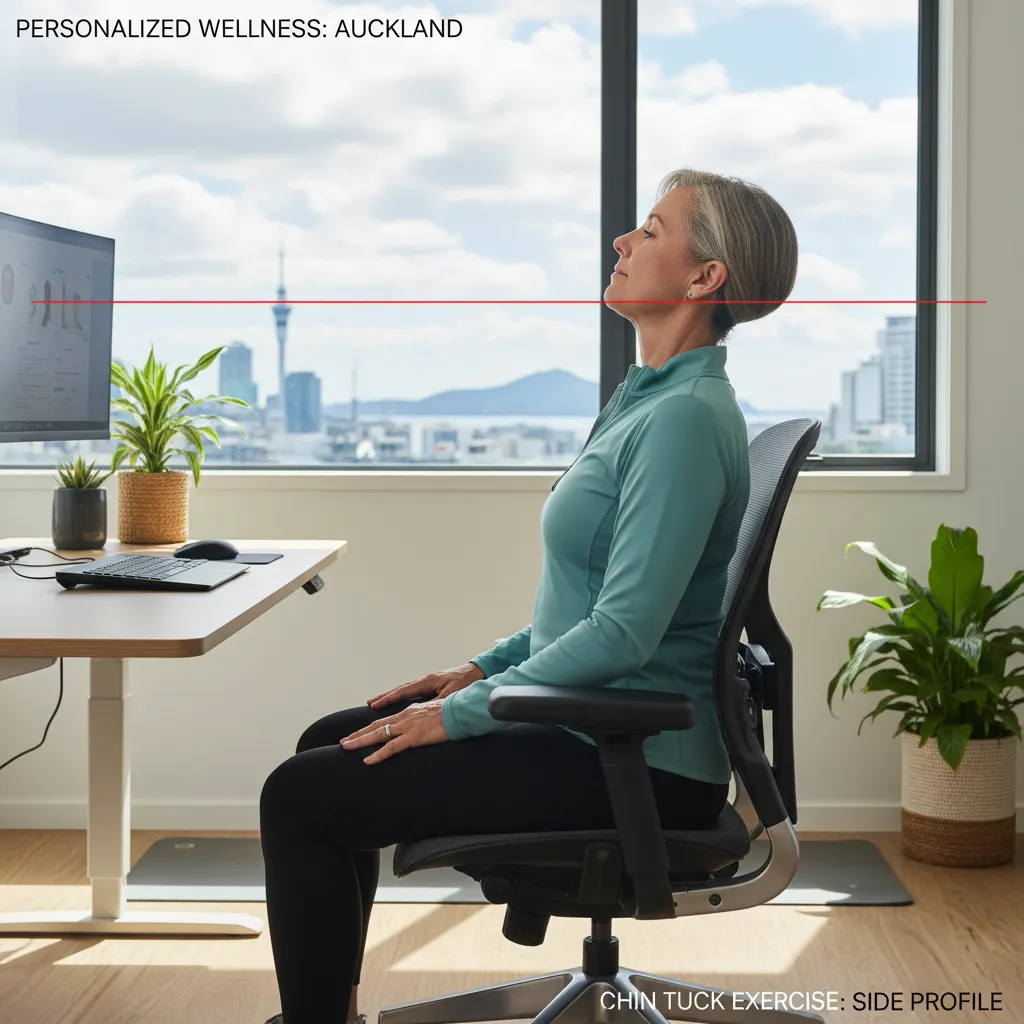
1. Chin Tucks (The Cervical Spine Saver)
This exercise directly combats “tech neck” by strengthening the deep neck flexors and encouraging proper head alignment.
- Sit or stand tall, looking straight ahead.
- Gently pull your chin straight back, as if making a double chin, without tilting your head up or down.
- You should feel a stretch at the back of your neck and engagement at the front.
- Hold for 5-10 seconds, then release.
- Repeat 10-15 times.
2. Thoracic Extension Over a Foam Roller (Open Your Chest)
Excellent for reversing rounded shoulders and hunching, common with prolonged sitting.
- Lie on your back with a foam roller placed horizontally across your mid-back, just below your shoulder blades.
- Interlace your fingers behind your head to support your neck.
- Gently arch your upper back over the foam roller, allowing your head to drop towards the floor (only go as far as comfortable).
- Hold for 20-30 seconds.
- Shift the roller slightly up or down your mid-back and repeat.
- Perform 3-5 repetitions at different spots.
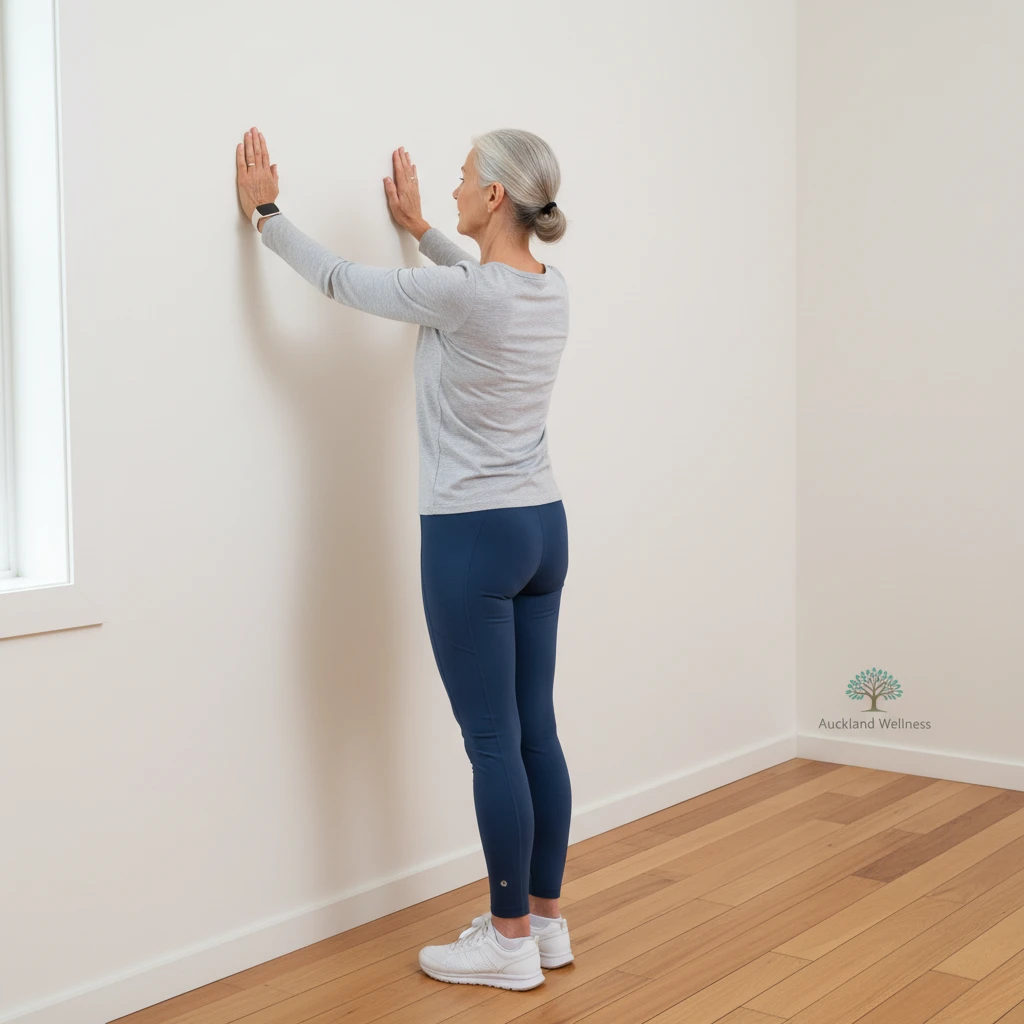
3. Wall Angels (Shoulder Blade Sculptor)
This move helps strengthen the muscles between your shoulder blades and improves shoulder mobility.
- Stand with your back flat against a wall, heels about 6 inches away.
- Press your head, upper back, and sacrum (tailbone area) into the wall.
- Bring your arms up into a “W” shape, with your elbows bent at 90 degrees and the backs of your hands, wrists, and elbows touching the wall.
- Slowly slide your arms up the wall, aiming to keep everything in contact, until they form a “Y” shape.
- Slowly lower them back to the “W” position.
- Repeat 8-12 times.
4. Doorway Chest Stretch (Un-Hunch Yourself)
Opens up the chest muscles that become tight from prolonged sitting and contributes to rounded shoulders.
- Stand in a doorway, placing your forearms on the doorframe with elbows bent at 90 degrees, slightly above shoulder height.
- Step one foot forward through the doorway until you feel a gentle stretch across your chest and the front of your shoulders.
- Keep your core engaged and avoid arching your lower back.
- Hold for 20-30 seconds, breathing deeply.
- Repeat 2-3 times.
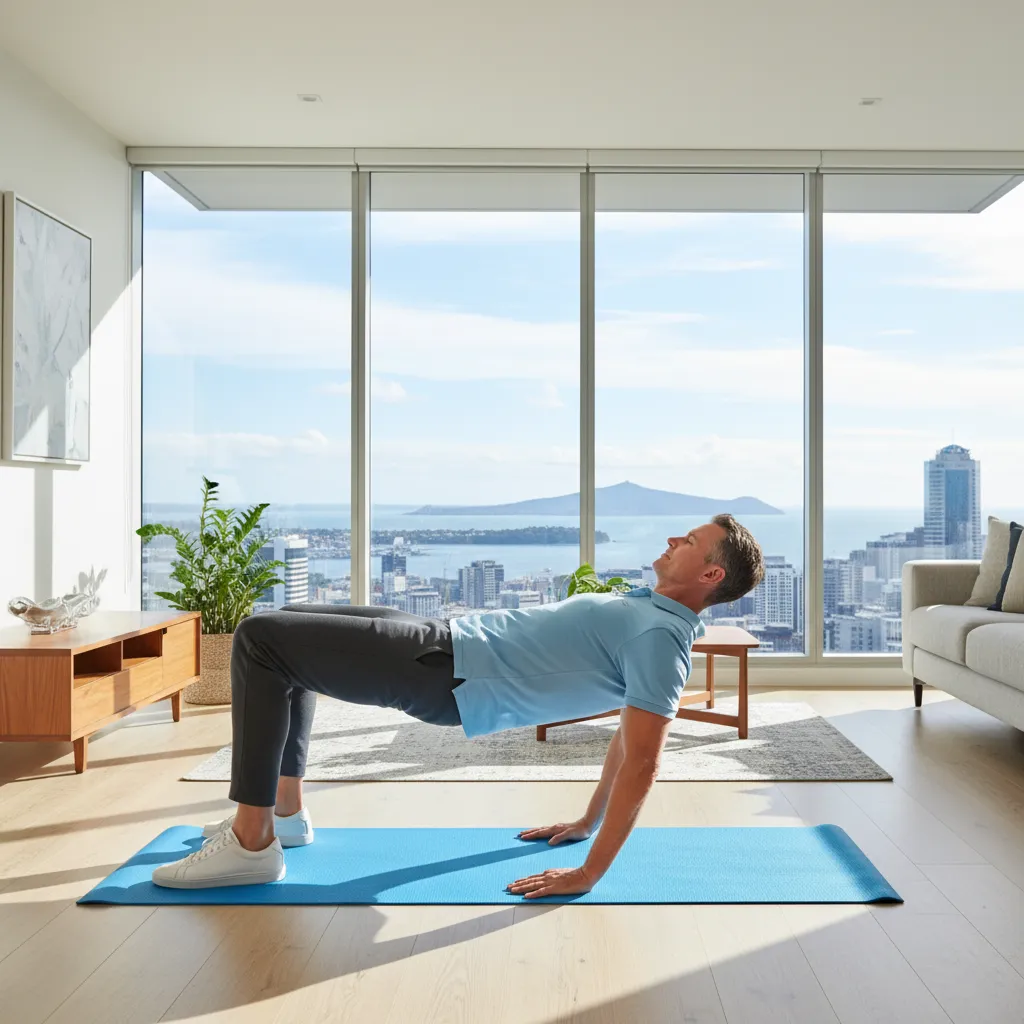
5. Glute Bridges (Foundation for a Strong Core)
Strengthening your glutes and core provides a stable base for your spine, improving overall posture.
- Lie on your back with knees bent, feet flat on the floor hip-width apart, and heels a few inches from your glutes.
- Keep your arms by your sides with palms down.
- Engage your core and glutes, then lift your hips off the floor until your body forms a straight line from your shoulders to your knees.
- Hold for 2-3 seconds at the top, squeezing your glutes.
- Slowly lower your hips back down.
- Repeat 10-15 times for 2-3 sets.
Conclusion: Stand Tall, Live Fully
Incorporating these posture correction exercises into your daily regimen is a powerful step towards a healthier, more comfortable, and confident life. Whether you’re an Auckland professional striving for peak performance or part of the Silver Economy embracing active aging, the benefits of improved posture are immense.
Start small, be consistent, and listen to your body. Even a few minutes a day can lead to significant improvements in how you feel, move, and present yourself. If you’re experiencing severe or persistent pain, always consult with a healthcare professional or consider Specialized Personal Training Services to ensure these exercises are appropriate for you.
Embrace these simple yet effective practices, and stand tall in every aspect of your Auckland life!
Frequently Asked Questions (FAQ)
-
Q: How long does it take to correct posture with exercises?
A: Consistency is key. You might notice small improvements in a few weeks, but significant changes can take several months. It depends on the severity of your current posture, how consistently you perform the exercises, and your body’s response. Check Top Personal Trainers in Auckland Reviews to find a professional who can keep you on track. Make it a daily habit!
-
Q: Can I do these posture correction exercises at my office desk?
A: Absolutely! Chin tucks and gentle shoulder blade squeezes (similar to Wall Angels but without the wall) can be done discreetly at your desk. Taking short breaks to perform these can counteract the effects of prolonged sitting.
-
Q: Are these exercises suitable for older adults in the Silver Economy?
A: Yes, these exercises are generally safe and highly beneficial for older adults as they focus on fundamental movements to strengthen core postural muscles and improve flexibility. However, if you have any pre-existing health conditions or concerns, it’s always best to consult with your doctor or a physiotherapist before starting a new exercise program.
-
Q: What’s the most common posture problem for mobile professionals?
A: “Upper Crossed Syndrome” is very common, characterized by rounded shoulders, a forward head posture, and a hunched upper back. This often stems from excessive time spent looking at screens (laptops, phones) and driving, leading to tight chest muscles and weak upper back muscles.
References/Sources
- Journal of Physical Therapy Science. (2016). Effects of prolonged sitting on posture and muscle activity.
- American Council on Exercise (ACE). (Ongoing). Posture & Alignment Resources.
- Harvard Health Publishing. (2019). The surprising benefits of good posture.
- Mayo Clinic. (2020). Back pain: Prevention and exercise.
- National Institute of Health (NIH). (Ongoing). Research on aging and physical activity.


