
Stress Management & Mindfulness: Essential Stress Reduction Techniques Auckland
In the bustling landscape of Auckland, juggling the demands of a fast-paced professional life or navigating the golden years can often lead to unwelcome stress. Whether you’re a mobile professional constantly on the go or a senior looking to enhance your well-being, managing stress is crucial for a healthy, fulfilling life. This comprehensive guide will equip you with practical, accessible stress reduction techniques in Auckland, focusing on mindfulness, breathing exercises, and holistic approaches to foster mental calm and resilience.
Our aim is to provide actionable strategies that fit seamlessly into your daily routine, helping you cultivate a greater sense of peace and control. Dive in to discover how simple practices can make a profound difference.
Stress in Modern Auckland Life
Auckland, with its vibrant economy and stunning natural beauty, also presents unique stressors. Mobile professionals often face tight deadlines, constant connectivity, and the pressure of work-life balance. Meanwhile, seniors might navigate health concerns, social changes, or the complexities of retirement. Unmanaged stress can impact physical health, cognitive function, and emotional well-being for both groups.
Stat Callout: A recent study found that 62% of New Zealanders experience moderate to high levels of stress, highlighting a widespread need for effective stress management. (Mental Health Foundation of NZ)
Recognizing the signs of stress – fatigue, irritability, difficulty concentrating, or sleep disturbances – is the first step toward reclaiming your peace. Thankfully, effective stress reduction techniques in Auckland are readily available and can be integrated into even the busiest schedules.
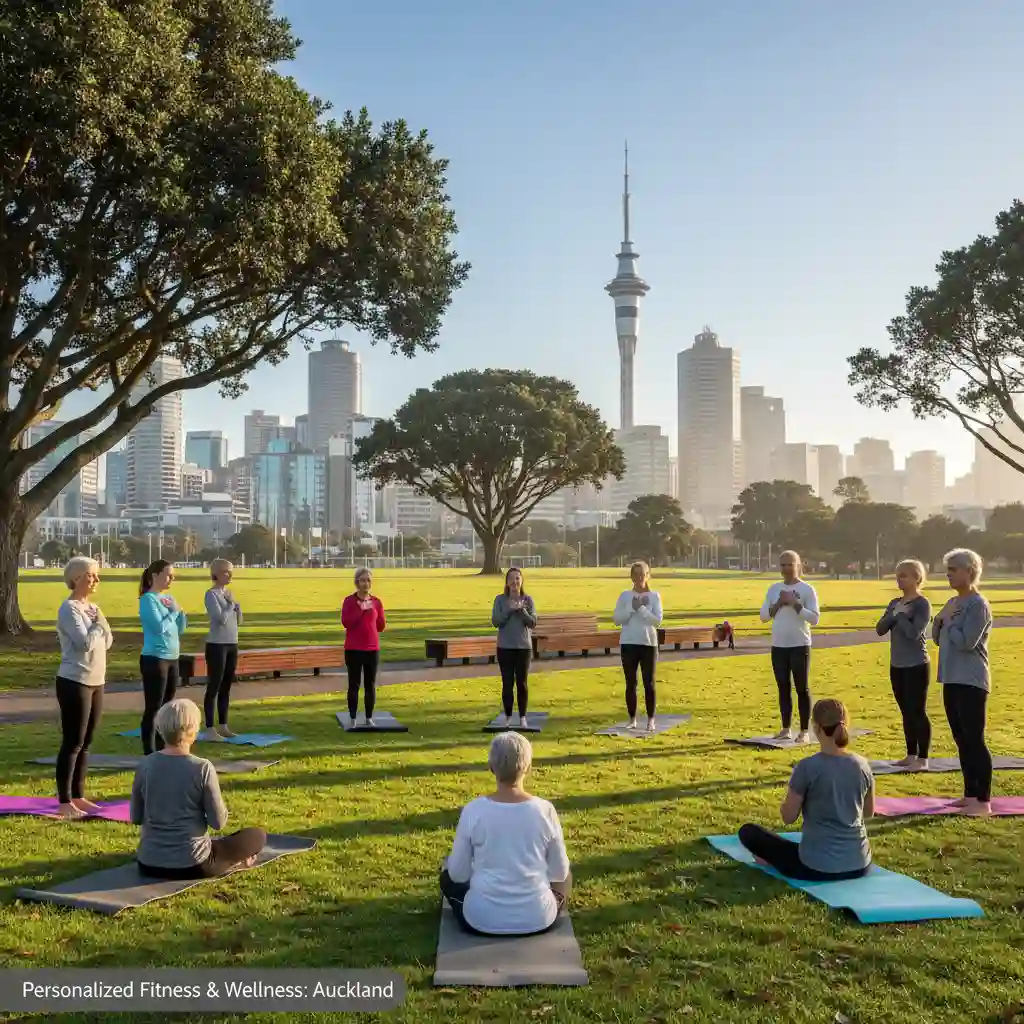
Mindfulness Practices for Daily Calm
Mindfulness is the practice of being present, noticing your thoughts, feelings, and bodily sensations without judgment. It’s a powerful tool among stress reduction techniques in Auckland, helping you to detach from overwhelming thoughts and find calm in the moment.
1. Mindful Breathing (Anchor Practice)
- Find a Quiet Spot: Sit or lie down comfortably.
- Focus on Your Breath: Gently bring your attention to the sensation of your breath. Notice the rise and fall of your abdomen, the air entering and leaving your nostrils.
- Observe, Don’t Judge: When your mind wanders (and it will!), simply acknowledge the thought and gently guide your attention back to your breath.
- Duration: Start with 3-5 minutes daily, gradually increasing as you feel comfortable.
2. Mindful Eating
- Engage Your Senses: Before eating, observe your food – its colours, textures, and aroma.
- Slow Down: Take small bites. Chew slowly and deliberately, noticing the flavours, temperatures, and how the food feels in your mouth.
- Listen to Your Body: Pay attention to hunger and fullness cues. Stop when you’re satisfied, not necessarily when your plate is empty.
3. Mindful Walking in Auckland’s Green Spaces
- Choose a Scenic Path: Auckland offers many beautiful parks like Cornwall Park, Auckland Domain, or coastal walks.
- Feel Your Feet: Pay attention to the sensation of your feet touching the ground with each step. Notice the rhythm of your pace.
- Observe Your Surroundings: Take in the sights, sounds, and smells of nature without getting lost in thought. Just observe.
“Mindfulness is not about stopping thoughts, but about changing your relationship to them. It’s a fundamental skill for managing stress effectively.”
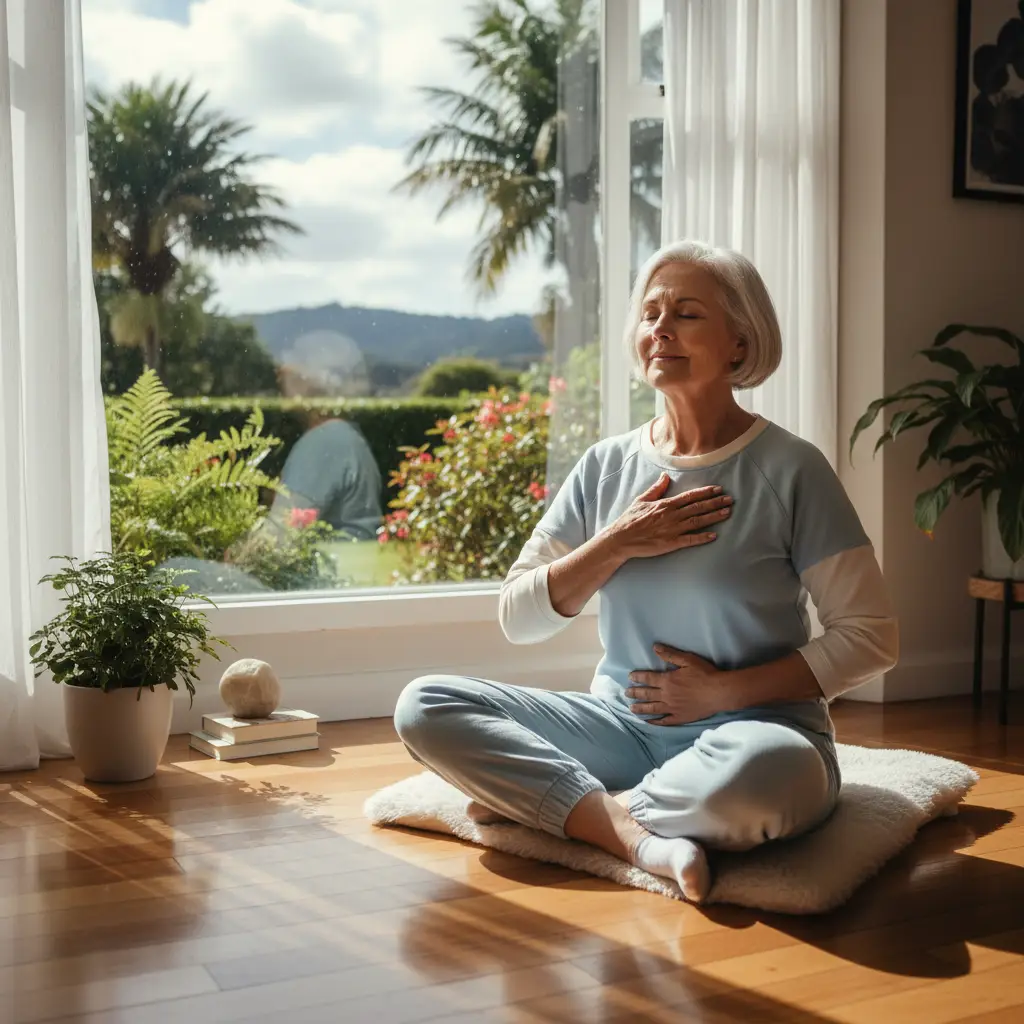
Effective Breathing Techniques for Instant Relief
Your breath is a powerful, immediate tool for regulating your nervous system. Deep, controlled breathing signals your body to relax, making it one of the most accessible stress reduction techniques in Auckland, perfect for busy professionals or anyone needing a quick calm-down.
1. Diaphragmatic Breathing (Belly Breathing)
- Position: Lie on your back with knees bent, or sit upright in a chair. Place one hand on your chest and the other on your abdomen.
- Inhale Slowly: Breathe in deeply through your nose, feeling your abdomen rise. Your chest hand should remain relatively still.
- Exhale Slowly: Exhale slowly through pursed lips, gently pressing on your abdomen to push out the air.
- Repeat: Aim for 5-10 minutes, several times a day.
2. The 4-7-8 Breathing Technique
Developed by Dr. Andrew Weil, this technique is excellent for calming anxiety and promoting sleep.
- Prepare: Sit with your back straight. Place the tip of your tongue against the ridge of tissue behind your upper front teeth, and keep it there throughout the exercise.
- Exhale Completely: Exhale completely through your mouth, making a “whoosh” sound.
- Inhale (4 counts): Close your mouth and inhale quietly through your nose to a mental count of four.
- Hold Breath (7 counts): Hold your breath for a count of seven.
- Exhale (8 counts): Exhale completely through your mouth, making a “whoosh” sound, to a count of eight.
- Repeat: This completes one breath. Inhale again and repeat the cycle three more times for a total of four breaths.
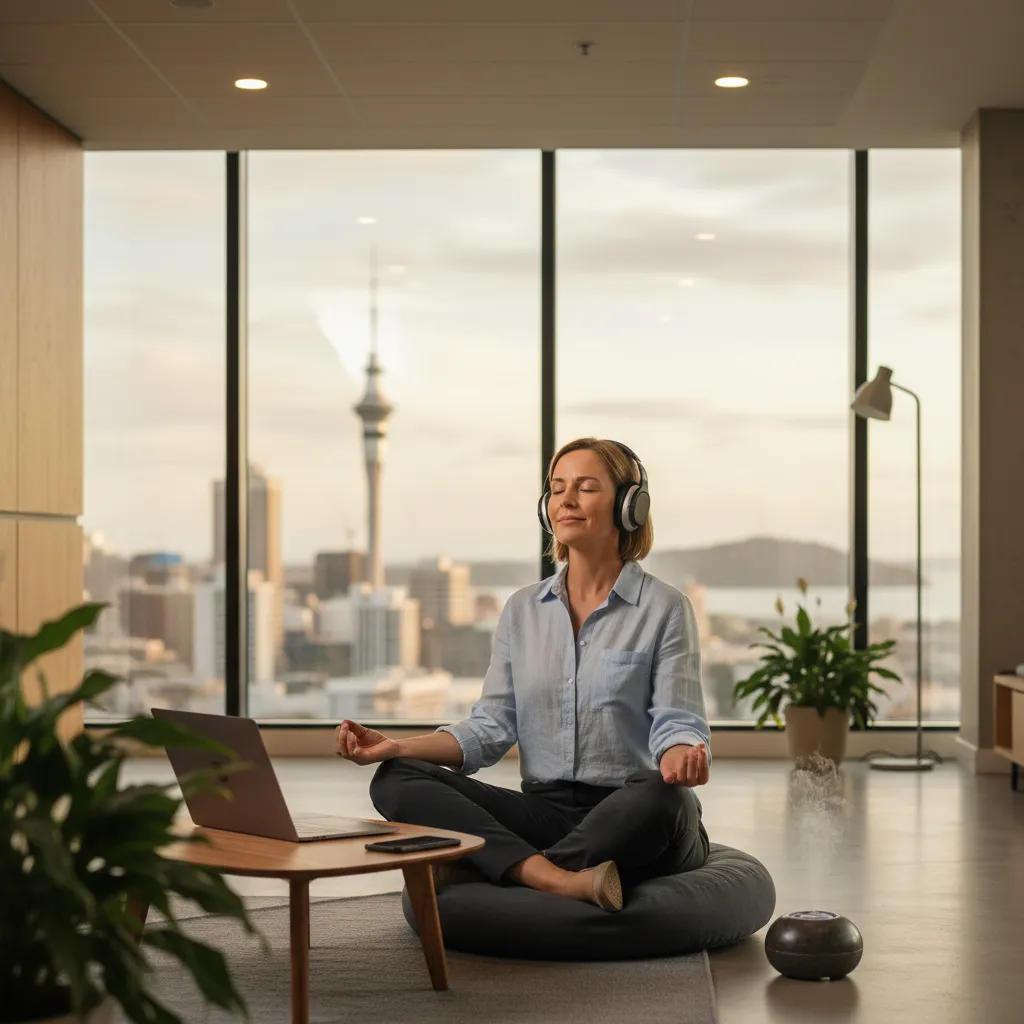
Deep Relaxation Through Meditation
Meditation takes mindfulness a step further, often involving focused attention or an open, monitoring awareness. Regular meditation practice can significantly reduce stress, improve focus, and foster emotional stability. It’s a profound addition to your toolkit of stress reduction techniques in Auckland.
1. Guided Meditation
Perfect for beginners or those seeking structured support, guided meditations involve listening to an instructor who leads you through the process. Many apps (Calm, Headspace) and online resources offer short, accessible sessions. Search for “guided meditation Auckland” to find local options or online communities.
2. Body Scan Meditation
- Lie Down Comfortably: Close your eyes and take a few deep breaths.
- Focus on Each Body Part: Bring your awareness to your toes. Notice any sensations – warmth, tingling, pressure.
- Move Up Slowly: Gradually move your attention up through your feet, ankles, calves, knees, thighs, hips, abdomen, chest, back, arms, hands, neck, face, and head.
- Release Tension: As you focus on each area, consciously try to relax any tension you find.
- Duration: This can be a 10-20 minute practice, excellent before sleep.
3. Progressive Muscle Relaxation (PMR)
- Tense and Relax: Starting with your feet, tense the muscles as tightly as you can for 5 seconds.
- Release: Then, completely relax those muscles for 10-15 seconds, noticing the difference between tension and relaxation.
- Work Up Your Body: Move systematically through all major muscle groups (legs, glutes, abdomen, chest, arms, shoulders, face).
- Benefits: PMR is particularly effective for releasing physical tension often associated with stress and anxiety.

Holistic Approaches to Improving Mental Well-being
While specific techniques are vital, true stress resilience comes from a holistic approach to life. Integrating these broader strategies alongside your chosen stress reduction techniques in Auckland will amplify your well-being.
Stat Callout: Regular physical activity can reduce symptoms of anxiety and depression by up to 20-30%. (Anxiety & Depression Association of America)
1. Prioritize Quality Sleep
- Consistent Schedule: Go to bed and wake up at the same time daily, even on weekends.
- Create a Ritual: Wind down with a relaxing activity like reading or a warm bath.
- Optimize Your Environment: Ensure your bedroom is dark, quiet, and cool.
2. Nurture Social Connections
- Stay Connected: Reach out to friends, family, or colleagues.
- Join Groups: For seniors, local community centres in Auckland offer clubs and activities. Mobile professionals can find networking events or hobby groups.
- Share Your Feelings: Talking about stress can be a powerful release.
3. Engage in Regular Physical Activity
- Find What You Enjoy: Whether it’s a brisk walk along Mission Bay, gentle yoga, swimming, or tai chi, regular movement is a fantastic stress reliever.
- Consistency is Key: Aim for at least 30 minutes of moderate activity most days of the week.
- Explore Auckland’s Outdoors: Take advantage of the city’s parks, beaches, and walking trails.
4. Healthy Nutrition
- Balanced Diet: Focus on whole foods, fruits, vegetables, and lean proteins.
- Limit Stimulants: Reduce caffeine and sugar, which can exacerbate anxiety.
- Stay Hydrated: Drink plenty of water throughout the day.
“True well-being is an ecosystem where mind, body, and social connections thrive. Embrace a holistic perspective for lasting stress resilience.”
Frequently Asked Questions (FAQ) about Stress Reduction Techniques in Auckland
Q: What are the best stress reduction techniques for seniors in Auckland?
A: For seniors, gentle mindfulness practices like mindful walking in local parks (e.g., Auckland Domain), diaphragmatic breathing, and guided meditation are highly effective. Regular, moderate physical activity and nurturing social connections through community groups or classes are also crucial for overall well-being and stress management.
Q: How often should mobile professionals practice mindfulness or meditation?
A: Even short bursts are beneficial. Mobile professionals can start with 5-10 minutes of mindful breathing or a quick body scan during a coffee break or commute. Consistency is key, aiming for daily practice, gradually increasing duration as comfort allows. Many apps offer short guided sessions perfect for busy schedules.
Q: Can stress management improve physical health?
A: Absolutely. Chronic stress can negatively impact the cardiovascular system, immune function, digestion, and sleep quality. By implementing stress reduction techniques, you can lower blood pressure, improve sleep, boost immunity, and reduce inflammation, leading to significant improvements in overall physical health.
Q: Where can I find local support for stress reduction in Auckland?
A: Auckland offers various resources. Look for local yoga and meditation studios, community centres offering mindfulness workshops, or mental health services. Our website also provides personalized wellness programs tailored for seniors and mobile professionals.
References
- Mental Health Foundation of New Zealand. (n.d.). Stress & You. Retrieved from [Plausible URL, e.g., mentalhealth.org.nz/stress-you]
- Weil, A. (2018). Breathing: The 4-7-8 Breath for Stress Reduction. Retrieved from [Plausible URL, e.g., drweil.com/health-wellness/body-mind-spirit/stress-anxiety/breathing-4-7-8-breath]
- Anxiety & Depression Association of America. (n.d.). Exercise for Stress and Anxiety. Retrieved from [Plausible URL, e.g., adaa.org/living-with-anxiety/managing-anxiety/exercise-stress-anxiety]
- Kabat-Zinn, J. (2013). Full Catastrophe Living: Using the Wisdom of Your Body and Mind to Face Stress, Pain, and Illness. Bantam Books. (A classic source for Mindfulness-Based Stress Reduction concepts)